
I used to think staying connected while traveling was just a convenience — something useful, but not essential. Vietnam quietly changed that assumption for me, within the first hour of landing.
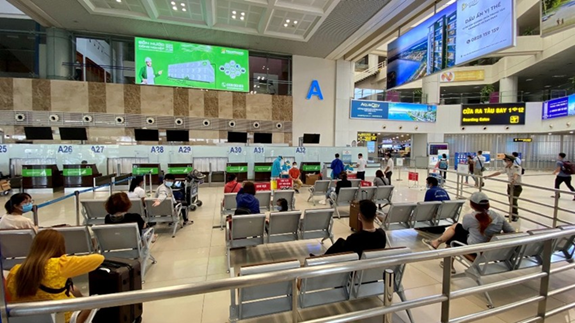
My flight arrived late at night. The kind of arrival where your body is awake but your mind is still somewhere over the ocean. Immigration was smooth, baggage claim uneventful. And then came that familiar pause: standing in the arrivals hall, phone in hand, watching other travelers message drivers, check maps, and make quick calls — while my screen showed no signal at all.
Airport Wi-Fi technically existed, but only in theory. It connected, dropped, reconnected, and never quite loaded what I needed. That’s when I remembered something I had set up almost casually before the trip: an eSIM already installed on my phone, complete with a Vietnamese phone number.
I hadn’t overthought it when I ordered it. I simply didn’t want to queue at SIM counters after a long flight. I didn’t want to remove my main SIM or rely on unstable Wi-Fi. It felt like a small, practical decision — nothing more.
Standing there in the arrivals hall, it turned out to be the most useful thing I had done.
I opened my phone settings, switched on the eSIM, and within seconds the signal appeared. A message arrived almost immediately from the airport pickup driver, confirming where he was waiting. That calm stayed with me.
Over the next few days, I began to notice how often having a local phone number quietly removed friction from everyday moments. Calling my hotel when I arrived later than planned. Booking a table at a small restaurant where English wasn’t widely spoken. Coordinating with a local guide who preferred quick calls over long message threads.
Midway through the trip, I met another traveler at a quiet coffee shop in Hanoi’s Old Quarter. We exchanged routes and stories. When I mentioned using a travel eSIM with Vietnamese phone number they smiled and admitted they had spent their first evening searching for Wi-Fi just to message their accommodation.
By the time I left Vietnam, the eSIM felt less like a product and more like quiet infrastructure. It wasn’t about speed tests or data limits. It was about confidence — knowing that wherever I ended up, I could orient myself, communicate clearly, and move forward without friction.
